Best Caviar for
First-Time Buyers

Firm believer that everyone’s first jar should be a good one.
The Best First Experience Is Usually the Simplest One
For something that’s been around for centuries, caviar has an impressive ability to make people feel like they’re late to the party.
Spend five minutes researching it online and you’ll find yourself comparing unfamiliar species, debating whether you’re “supposed” to like one variety more than another, and wondering if you’re about to spend good money on a food you may not even understand. Before long, buying a small caviar jar starts to feel like a final exam you forgot to study for.
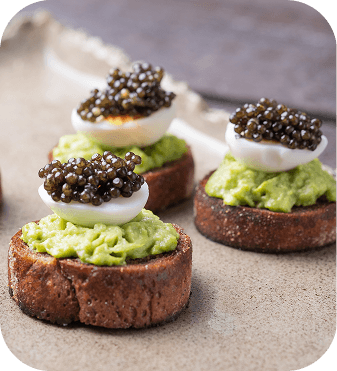 It’s an unfortunate side effect of how the category has been marketed for decades. Caviar has often been presented as something reserved for experts, collectors, or people who already know the difference between every species of sturgeon. That image may have helped build its mystique, but it has also convinced plenty of curious people to stay on the sidelines.
The reality is much less intimidating.
Your first experience doesn’t need to answer every question about caviar. It only needs to answer one: Would I enjoy doing this again? Once you approach it from that perspective, the decision becomes surprisingly manageable.
Quick Takeaway
The best first caviar experience starts with curiosity, not expertise. Keep the first jar simple and let the rest come naturally.
A Good Introduction Builds Confidence
People rarely become enthusiastic about caviar because they bought the rarest product available. More often, they become enthusiastic because someone put a genuinely good product in front of them without turning the experience into a ceremony.
That’s why your first jar matters so much.
 A well-produced premium caviar gives you something far more valuable than exclusivity. It gives you a reliable
point of reference. You begin to understand the texture, the freshness, and the quiet
complexity that people have been talking about for years. Suddenly
the category feels less mysterious because you have your own
experience to compare everything else against.
A well-produced premium caviar gives you something far more valuable than exclusivity. It gives you a reliable
point of reference. You begin to understand the texture, the freshness, and the quiet
complexity that people have been talking about for years. Suddenly
the category feels less mysterious because you have your own
experience to compare everything else against.
The opposite is also true. A disappointing first purchase can create the impression that caviar is overrated, when the real problem may have been inconsistent handling, an unnecessarily long supply chain, or a product that simply wasn’t a good introduction. Most people don’t realize how much those variables matter until they’ve had the chance to compare them.
That’s why a strong first experience is worth protecting.
Why So Many First-Time Buyers Start with Kaluga
If you’ve spent any time researching premium caviar, you’ve probably noticed that Kaluga caviar appears in recommendation after recommendation.
That isn’t because it’s fashionable.
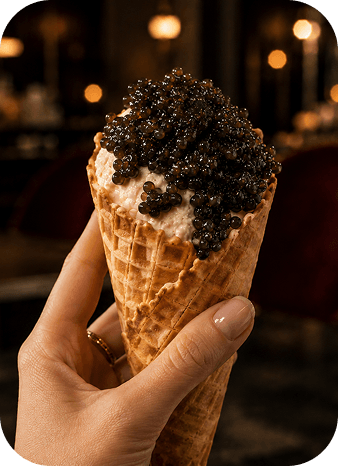 It’s because it consistently gives people a balanced introduction to what quality caviar should feel like. The pearls are substantial without being intimidating, the overall character is refined without demanding an experienced palate, and it performs just as comfortably during a casual evening at home as it does during a small caviar tasting with friends.
Consistency may not sound exciting, but it’s exactly what a first-time buyer should want.
The goal isn’t to experience every possible nuance during your first jar. The goal is to understand why caviar earned its reputation in the first place. Once you have that foundation, exploring other varieties becomes much more enjoyable because you’re comparing them against a reliable baseline instead of trying to learn everything at once.
Don’t Try to Buy for the Person You Think You’re Supposed to Be
One of the easiest mistakes people make is shopping for an imaginary version of themselves.
They picture an extravagant dinner party, a formal tasting, or the kind of occasion that only seems to exist in magazine ads. The result is that they choose a product based on an image instead of the experience they’re actually going to have.
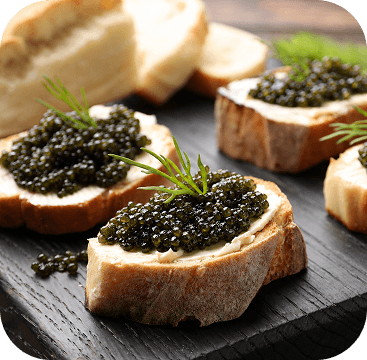 Most first purchases happen much more quietly.
It’s a Friday evening after work. A weekend with someone you enjoy spending time with. A small celebration that doesn’t need an excuse. Those moments don’t require the most exclusive caviar available. They require a product that’s consistent, thoughtfully sourced, and enjoyable enough to make you wonder why you waited so long.
Luxury has always been better at creating expectations than creating comfort.
The best first experience does the opposite. It makes something that once felt intimidating feel completely natural.
Quick Takeaway
Buy caviar for the moment you’re actually living, not the one luxury ads invented. Great first experiences start with comfort, not ceremony.
Premium Doesn’t Have to Mean Out of Reach
For years, the word “premium” quietly became confused with “unattainable.”
They aren’t the same thing.
Premium describes the care that goes into producing, handling, and presenting a product. It doesn’t automatically mean unnecessary extravagance. In many cases, what separates one product from another isn’t the caviar itself but the number of businesses involved before it reaches your refrigerator.
 Longer supply chains tend to introduce more
markup without improving the product inside the jar.
Longer supply chains tend to introduce more
markup without improving the product inside the jar.
That’s one reason direct sourcing has become such an important shift in the industry. When producers shorten the path between harvest and customer, the relationship between quality and price becomes easier to understand. You’re paying for the caviar itself rather than every layer wrapped around it.
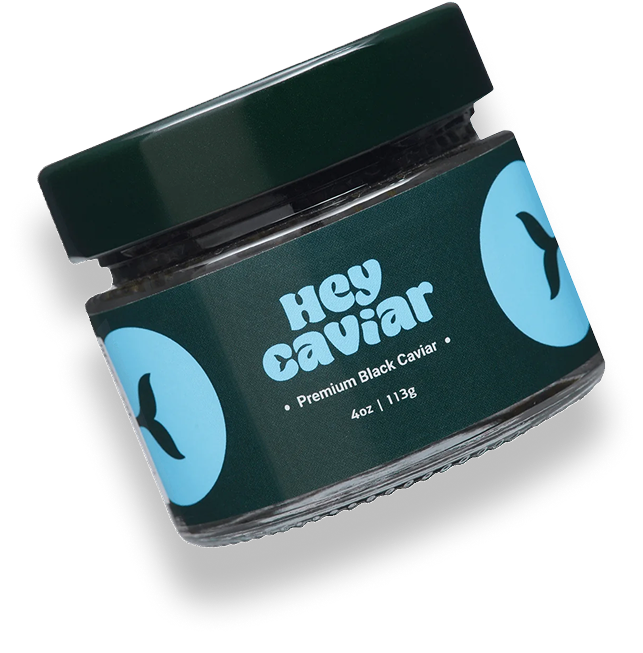
At Hey Caviar, that’s been the philosophy from the beginning. The objective isn’t to make caviar feel exclusive. It’s to make genuinely excellent caviar easier to experience while preserving everything that made it worth seeking out in the first place.
Your First Jar Should Lead to Your Second
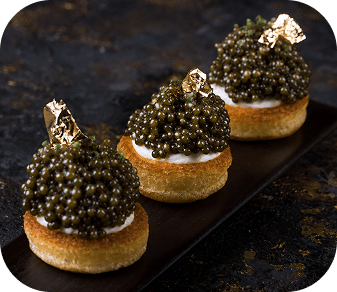
The best first purchase isn’t the one that impresses strangers, but rather the one that leaves you curious enough to taste caviar more confidently.
Curious enough to try another variety. Curious enough to invite someone else to share it. Curious enough to realize that caviar isn’t a food reserved for a handful of special occasions, but one that rewards paying attention and choosing well.
If your first experience accomplishes that, you’ve chosen the right place to begin.
Everything after that becomes exploration instead of uncertainty.

Why Small
Luxuries Aren’t
Going Anywhere?
This is a recalibration, not a phase. People are learning that joy doesn’t need scale, indulgence doesn’t need permission, casual luxury doesn’t need to last to matter
Small luxuries work because they respect reality. They meet people where they are… Tired, busy, still deserving of something good. And right now, that’s enough.
Actually? That’s everything.