How to Buy Caviar: A Complete
Guide to Choosing the Right
One Online

Lover of cold spoons, short supply chains, and products that justify themselves
How to Buy Caviar Without Overpaying, Overthinking, or Ending Up Disappointed
Buying caviar used to feel like entering a private club where nobody explained the rules.
A lot of that came from the industry itself. The language was vague, the pricing felt arbitrary, and every product seemed wrapped in some version of “luxury” without much clarity underneath it. For a long time, people bought caviar the same way people buy wine when they’re intimidated by wine: by guessing, overspending, or trusting branding they barely understood.
Today, premium caviar is much easier to find online. Specialty retailers, marketplaces, and direct suppliers all sell it, which gives buyers far more choice than they had a few years ago. It also means that well-handled caviar appears next to products whose packaging tells you more than their sourcing or freshness.
Two jars can look almost identical online and arrive in very different conditions. Before ordering, it helps to know what species you’re buying, where the caviar comes from, how it has been handled, and how the seller plans to get it to your door.
Quick Takeaway
When buying caviar online, check the species, sourcing, handling, storage, and delivery. Those details tell you much more about the product than the packaging or the size of the price tag.
The Biggest Mistake People Make When Buying Caviar
Most disappointing caviar purchases have very little to do with choosing the wrong species.
Unclear sourcing, inconsistent handling, and unnecessary time between production and delivery are more likely to cause problems. Yet caviar marketing tends to put prestige front and center, so buyers naturally notice the name on the tin, the packaging, and the price first.
Caviar is unusually sensitive to time and temperature. A beautifully branded jar that spent too long moving through warehouses can arrive in worse condition than a simpler product that followed a shorter route and stayed properly chilled.
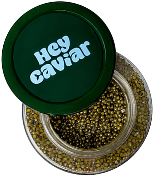
You get a much better idea of what you bought once the lid comes off. The beads should be intact and have the texture expected for the species. The aroma should be clean, and the flavor shouldn’t taste dull or suggest that the product has been sitting around too long.
We spend far more time worrying about those details than making the jar look like it belongs in a jewelry case. The caviar still has to be good when the lid comes off.
Why Species Matters More Than Branding
When people compare caviar, they often talk about brands as though the name on the jar defines what they are going to taste.
The species gives you a more useful starting point. Different sturgeon produce roe with different bead sizes, textures, levels of salinity, and flavor profiles. Some varieties have firmer eggs with a more noticeable pop, while others are softer and more delicate.
For many first-time buyers, Kaluga caviar is an approachable place to start. Its large beads tend to have a firm texture and a smooth, buttery flavor that is easy to appreciate without knowing much about caviar beforehand. It also works well with familiar pairings such as potato chips, blini, eggs, or crème fraîche.
Our Grade A Kaluga is the caviar we chose to build Hey Caviar around for much the same reason. It has enough character to be interesting on its own without being difficult for someone opening a jar for the first time.
A good first jar also gives you a reference point. Once you know the texture and flavor of well-handled caviar, comparing other species and producers becomes considerably easier.
Two jars at a similar price can still taste very different. Species tells you roughly what to expect; sourcing and handling have a lot to do with whether those qualities are still there when you eat it.
The Supply Chain Matters More Than Most People Expect
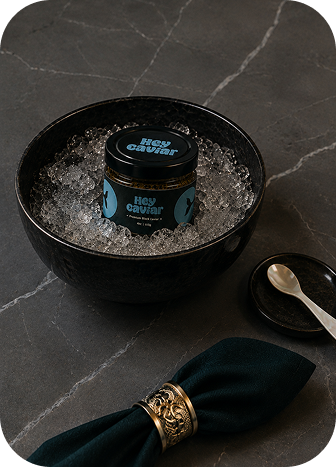
Caviar is one of the foods where logistics can noticeably affect the final product.
Every additional handoff adds time and another storage environment. Traditional retail systems may involve an importer, distributor, regional fulfillment center, and retailer before the caviar reaches the customer. None of those steps automatically damages the product, but each one requires proper temperature control.
A shorter supply chain can reduce intermediate storage and make the history of the product easier to follow. It can also remove some of the margins that accumulate when several businesses handle the same jar.
Our caviar takes a shorter route for exactly that reason. Fewer handoffs give us a clearer picture of where the product has been and how it has been stored before we send it out.
Direct sourcing still isn’t a guarantee of quality. Whoever sells the caviar has to store it correctly, pack it cold, and ship it quickly. A short supply chain is useful because it makes those variables easier to control, not because the word “direct” looks good on a product page.
Quick Takeaway
A shorter supply chain can reduce intermediate storage and unnecessary handoffs. It still needs proper temperature control and careful fulfillment to make a difference once the jar reaches you.
How to Evaluate Caviar Before You Buy It
You don’t need deep expertise to make a sensible caviar purchase. Most of the useful information should be available before you place the order.
Start with the species and origin. The product description should tell you what kind of sturgeon the roe comes from and give you some idea of the expected bead size, texture, and flavor. Then find out how the seller stores and ships it, especially if the order will spend time in transit.
A useful product page tells you concrete things about the caviar. If you can find several paragraphs about heritage and exclusivity but almost nothing about species, sourcing, storage, or delivery, you still don’t know much about what you’re buying.
Take our Grade A Kaluga as an example. We describe the large, firm beads, clean pop, and smooth, buttery flavor because those are things you can actually check when you open the jar. We also explain how the caviar gets to you. If you’re comparing us with another shop, those details give you something more useful to work with than two photographs of expensive-looking tins.
How quickly the seller moves inventory is worth considering as well. Caviar is perishable, so an enormous selection isn’t necessarily an advantage if some of those jars spend a long time waiting for a buyer.
Price Alone Tells You Almost Nothing
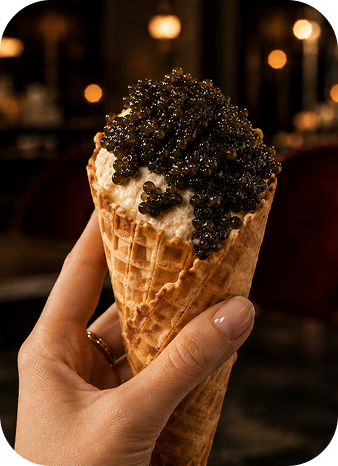
People naturally expect the more expensive jar to be the better one, but the retail price of caviar reflects more than the quality of the roe.
Species, farming time, grading, curing, and careful storage can legitimately increase the cost. Additional distributors, premium retail locations, elaborate packaging, and brand positioning can increase it too.
Lower-priced caviar needs the same context. A suspiciously cheap jar deserves a closer look, but a reasonable price can also come from a shorter supply chain or a simpler retail model with fewer costs added along the way.
Before deciding whether a jar is worth the money, compare what you’re actually getting. Check the species and grade, read the sourcing information, find out how the order will be handled, and see whether the seller gives you enough detail to know what should arrive.
You can do the same with our Kaluga. Put it next to another jar, compare the product information, sourcing, delivery, and price, and decide which one makes more sense to you. We’re comfortable being judged that way.
Buying Caviar Should Feel Simpler Than the Industry Makes It
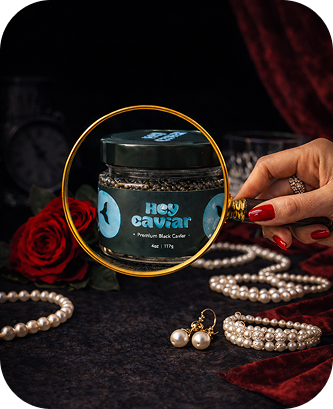
Caviar has accumulated decades of ceremony, unfamiliar terminology, and luxury marketing, which can make buying a jar seem more complicated than buying almost any other food.
In practice, a few questions cover most of what you need to know. Find out which species you’re buying and where it comes from. Read enough about the product to know what its texture and flavor should be like, then check how it has been stored and how it will reach your door.
You don’t need to memorize every sturgeon species or understand the hierarchy of old luxury houses before ordering dinner.
That thinking shaped Hey Caviar from the beginning. Give people good caviar, tell them what they’re buying, and get it to them in good condition. Nobody should need a decoder ring and a trust fund to order a jar.

Buy Caviar You Actually Want to Eat
If you’ve made it this far, you already know enough to compare a few jars properly. Look at the species, read where the caviar comes from, check how it will be shipped, and pay attention to what the seller tells you about the product itself. Then buy the one you actually want to open.
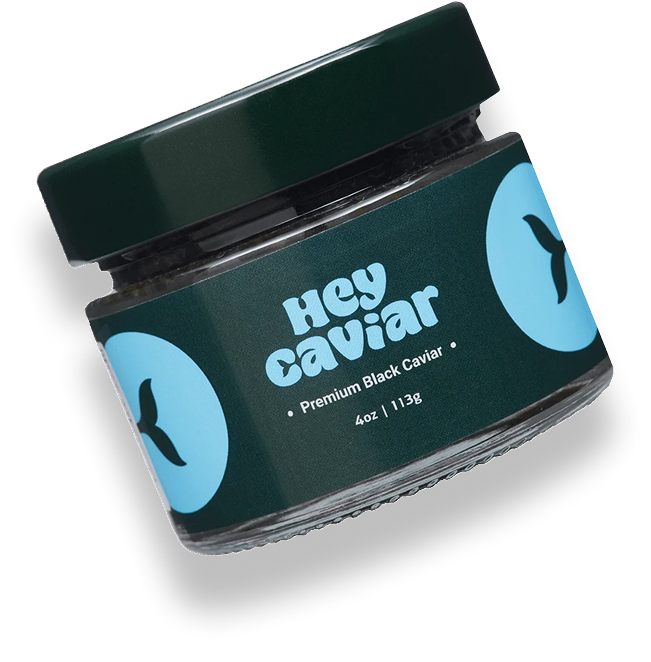
We sell Grade A Kaluga with large, firm beads, a clean pop, and a smooth, buttery flavor. It’s packed cold and doesn’t require much once it arrives: keep the jar chilled, grab a spoon or a bag of good potato chips, and invite people over only if you’re feeling generous.
You Know What to Look For. Pick Your Jar.