Is Expensive Caviar Worth It?
(And When It's Not)

Doubtful about anything that is more expensive merely because it can.
The Question Nobody Wants to Ask Out Loud
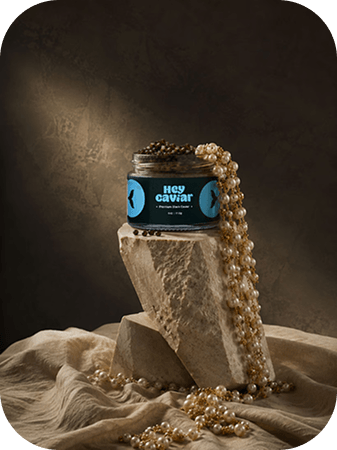 There is a quiet suspicion concerning caviar which is common to all people.
Part of what you are paying for in that price is not the product itself but the idea of the product—the sense of exclusivity, the packaging, and the feeling that you are joining a category which has always presented itself as rare and out of reach.
It’s not an indication of paranoia; at times it is completely correct.
It is not always correct either, and that is the more difficult truth to accept. Certain premium caviar truly justifies each dollar of its price through many years of careful production and precise handling, while other caviar does not. If you treat these two situations as if they are the same—whether by supposing that expensive always means better or by thinking that it never does—you make poor decisions in both cases.
The true issue is not whether caviar is worth the money. It is whether the particular premium you’re paying actually gets you something.
Quick Takeaway
Premium caviar is worth the price when you’re paying for quality, handling, and consistency, not just exclusivity, packaging, or prestige.

Three Categories, Not Two
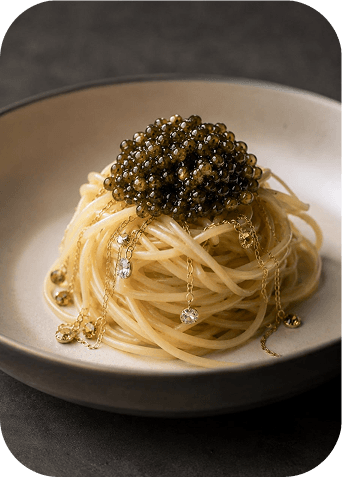 When people talk about how much caviar costs, the discussion always ends up being a straightforward choice between cheap and premium. This way of looking at things fails to take into account the category that is most important.
There are in fact three levels that are worth understanding.
Cheap caviar, which is priced with accessibility in mind, usually ends up being inconsistent. Premium caviar, which is priced on the basis of quality, is not always priced honestly. And then there is caviar that is directly sourced, occupying a rather unusual and useful middle position: it has the level of production typical of premium caviar without having the markup that is normally associated with it.
The fact of what distinguishes these three changes makes the whole question different. Instead of asking whether caviar is worth the money, the question becomes ‘which type of caviar is in fact delivering on what its price suggests.’
What You’re Really Getting With Cheap Caviar
It is not wrong to choose affordable caviar, and that point should be stated clearly.
In certain instances, a lower price is just the result of a more efficient operation—with less overhead, fewer intermediaries, and a producer who is willing to work on thinner margins. The product does not necessarily suffer as a result of this.
 However, in many instances it does. Cheap caviar is usually obtained from operations that are geared towards producing large quantities and speed rather than consistency. The sturgeon may be taken earlier than would be ideal. The handling may be less accurate. Quality control may be more relaxed, since the whole business model is based on getting the product moved quickly rather than handling it with care.
The true picture of this section is straightforward: buying cheap caviar is a risk. It may prove worthwhile at times, but more frequently the savings you make on price are later offset by inconsistencies in texture, taste, or freshness. That is in fact the real price of purchasing at the lowest end of the market, and this fact is seldom made clear at the outset.
When Premium Caviar Actually Earns Its Price
Real premium caviar costs a lot for a reason.
What it shows is sturgeon which have matured over a number of years rather than in a few months, the careful and deliberate way in which it is harvested, and a degree of precision in handling that simply involves greater costs to maintain. Kaluga caviar in particular is sold at a higher price since both the production timeline and the consistency it provides are difficult to rush. Once you are paying that amount, you are paying for something genuine.
It is the aspect of charging premium prices that stands up
 The thing that isn’t so is this: a significant part of what gives some high-end caviar its high price has nothing to do with the roe itself. The packaging design is responsible. The retail markup obtained by selling through specialty shops and luxury retailers contributes to it. Moreover, decades of brand positioning have caused people to link a high price with a better product, even if that is not actually the case when looking at the caviar in the jar.
Two products can end up at very different prices even if they have almost the same level of production quality, merely because one invested more time and money in making you believe it was exclusive. That isn’t a difference in quality; it’s a marketing expense, and it’s you who have to pay for it.
The Middle Ground Most People Don’t Know to Look For
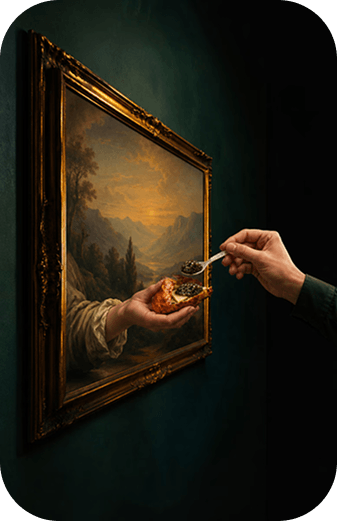 It is at this point that the discussion typically comes to a halt, since most people merely consider the choice between cheap and premium. There is, however, a third possibility that resolves the conflict between the two.
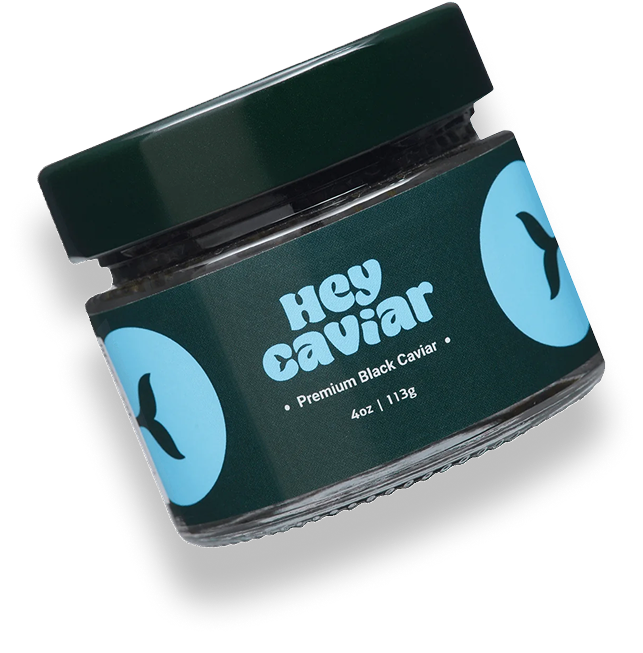
By obtaining caviar directly it is possible to eliminate the various stages of distribution that cause traditional premium pricing to rise, without making any changes to the production process. The sturgeon still takes the same amount of time to mature. The standards for harvesting and handling remain unchanged. The only thing that differs is what takes place after production: there are fewer importers, fewer wholesalers, and fewer retail markups being added on one after another before the caviar reaches you.
The end product is one that offers a quality comparable to that of traditional premium caviar yet excludes a large part of the price which is normally associated with quality. It is not merely cheap caviar with a more attractive label. Rather, it is premium-quality production without the usual premium price mark-up.
The whole case for direct sourcing depends on that distinction, and it should be taken seriously if at any time you’ve found the high price of premium caviar difficult to understand.
Quick Takeaway
Direct-sourced caviar can deliver premium quality for less by cutting importers, wholesalers, and retail markups, not production standards.
When Premium Genuinely Isn’t Worth It
It is worthwhile to state this honestly, even though it goes against the usual instinct of presenting premium as being always superior.
Premium caviar isn’t worth the price when the price itself is doing more work than the product; if two jars have the same species, the same handling, and the same freshness, yet one is considerably more expensive just because of the place it’s sold or the way it’s packaged, then that extra cost doesn’t give you a better experience. It only buys you a name.
 It’s not worthwhile either when there is a shorter and more direct way of achieving the same quality at a lower cost; it’s not sophistication to pay the traditional premium markup instead of obtaining the item directly at a more reasonable price, since you’re just leaving money on the table with no real benefit.
It’s reasonable to want to link a high price with high quality since the category has for many years reinforced that idea. However, price on its own has never been a dependable indicator, and acting as if it were doesn’t benefit anyone except the businesses that gain from the confusion.
A Simpler Way to Decide
 Rather than questioning whether caviar is expensive, one should consider what the price is actually reflecting.
A price is worth paying if it’s the result of years of careful production, accurate handling, and a steady outcome; but if it’s due to the packaging, the way the product is positioned, and the long series of intermediaries between the farm and your table, then the price is something that deserves to be questioned.
Direct sourcing ends up lying between the two figures mentioned, and that is precisely the reason it’s important to understand it before concluding that the higher figure must be the better one.

Why Small
Luxuries Aren’t
Going Anywhere?
This is a recalibration, not a phase. People are learning that joy doesn’t need scale, indulgence doesn’t need permission, casual luxury doesn’t need to last to matter
Small luxuries work because they respect reality. They meet people where they are… Tired, busy, still deserving of something good. And right now, that’s enough.
Actually? That’s everything.