How Much Does Caviar Cost?
Price vs Quality Explained

Lover of expensive things that earn it.
How Much Does Caviar Cost?
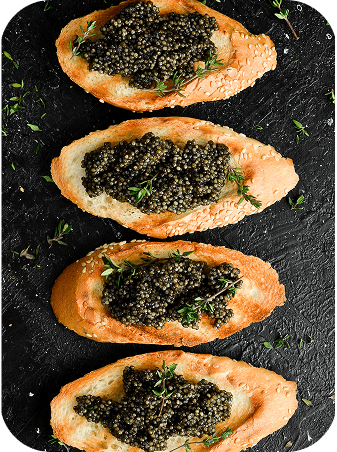
People have been conditioned to think of caviar as one of those foods with an almost mythical price tag.
Mention it at a dinner party and someone will inevitably joke that they need to refinance the house first. Somewhere along the way, caviar became less of a food and more of a symbol. The assumption is that if it costs a lot, it must be exceptional. If it costs less than expected, something must be wrong with it.
Neither assumption is particularly useful when you’re actually trying to buy a jar of caviar.
Caviar prices reflect several things at once. The species and age of the sturgeon matter, as do the farming, harvesting, curing, storage, and handling of the roe. Then there are costs added after production: distribution, retail margins, packaging, and the route the jar takes before it reaches you.
Understanding those factors makes it much easier to tell whether you’re paying for good caviar or simply paying more for it.
Quick Takeaway
A higher price doesn’t automatically mean better caviar. Look at the species, production, sourcing, handling, and supply chain to understand what you’re actually paying for.
Some Costs Are Built Into the Product
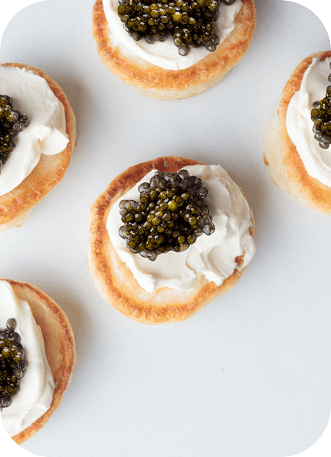
Good caviar is genuinely difficult to produce.
Sturgeon mature slowly, often over many years, before they’re ready to produce roe. During that time they require carefully managed environments and ongoing monitoring. Harvesting and curing also require care because the eggs have to retain their shape, texture, and flavor through processing and packing.
All of that costs money before the finished caviar ever reaches a retailer.
When you’re looking at premium caviar, part of the price reflects the years required to raise the fish and the expertise involved in producing and curing the roe. Those are production costs that have a direct relationship to the product in the jar.
We think that distinction is useful at Hey Caviar because “expensive” on its own tells you very little. We care much more about whether the money spent before the jar reaches us contributed to the quality of the caviar.
Where Prices Start to Drift
Historically, caviar has moved through a long chain of importers, distributors, wholesalers, specialty retailers, and luxury food shops before reaching the customer. Every business involved needs to make a margin. Every additional handoff introduces another opportunity for storage, transportation, and delay.
Those costs eventually become part of the retail price even though they don’t change the roe itself.
This is one reason two similar jars can end up surprisingly far apart in price. One may have traveled through a relatively short supply chain. Another may have passed through several businesses before appearing on a retailer’s shelf, with costs added at each stage.
You usually can’t see that difference by looking at the jar.
At Hey Caviar, we prefer a shorter route. It gives us more visibility over the product and means fewer layers are adding cost between sourcing and the person who eventually opens the tin.
Price Is a Clue. It Isn’t the Answer.
One of the biggest misconceptions surrounding caviar is that price automatically predicts quality.
There is obviously a relationship between production quality and cost. Sturgeon that take years to mature, carefully managed farming, skilled processing, and proper cold storage aren’t cheap. A well-produced Kaluga caviar should cost more than roe produced or handled to a lower standard.
But the retail price also includes things that have little to do with how the caviar tastes. Elaborate packaging, several layers of distribution, expensive retail locations, and brand positioning can all raise the number on the label.
So when we compare caviar, we don’t treat the most expensive jar as the automatic winner. We want to know what produced the price and whether those costs contributed anything useful to the caviar.
What Actually Creates Value
A useful way to judge caviar is to look at what you get for the money.
Start with the product itself. Find out which species the roe comes from and what you can expect in terms of bead size, texture, and flavor. Then look at sourcing and handling. A seller should be able to tell you where the caviar comes from and give you a reasonable explanation of how it is stored and delivered.
The condition of the roe when you open the jar matters just as much. The beads should retain the texture expected for that particular caviar, and the flavor should be clean and characteristic of the product you ordered.
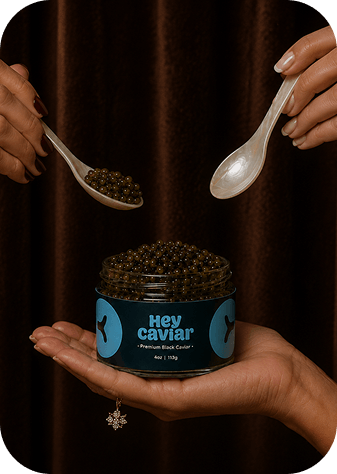
That’s the standard we use for our own Grade A Kaluga at Hey Caviar. We’re looking for large, firm beads, a clean pop, and the smooth, buttery flavor that makes Kaluga such an approachable black caviar. If those qualities aren’t there, a beautiful tin and an impressive price won’t make up for them.
Value becomes much easier to judge once you have those details. You can see which parts of the price are reflected in the caviar and which parts belong to everything surrounding it.
Learning to Compare Caviar More Confidently
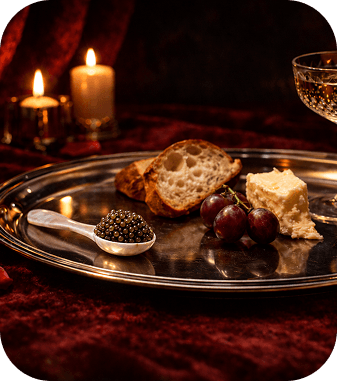
When two jars are sitting in front of you at different prices, start by comparing what they actually are.
Check the species first because different sturgeon have different production timelines and produce roe with different characteristics. Then compare sourcing, bead size, texture, flavor descriptions, storage, and delivery. If the seller explains those things clearly, you have enough information to make a useful comparison.
The supply chain deserves attention too. Caviar that moves through fewer intermediaries may spend less time in intermediate storage, although a shorter route still has to be managed properly. Direct sourcing is valuable when it comes with good temperature control and careful fulfillment.
This is how we prefer customers to compare Hey Caviar with another shop as well. Look at our Kaluga, look at theirs, compare the product information and how each jar gets to you, and then look at the price. You’ll have a much better idea of what each seller is asking you to pay for.
Quick Takeaway
Compare the species, sourcing, product characteristics, handling, and supply chain before comparing the final price. That context helps explain why two jars that look similar may cost different amounts.
The Goal Isn’t Finding the Cheapest Jar
Everyone likes feeling they’ve made a smart purchase.
With caviar, the lowest price can be attractive until you realize you know very little about what’s inside the jar or how it was handled. Paying more can make sense when the difference covers better production, careful storage, reliable shipping, or a product with characteristics you specifically want.
A lower price can also be perfectly legitimate. A seller with a shorter supply chain, focused inventory, and fewer traditional retail costs may simply have less to add to the original cost of the caviar.
At Hey Caviar, that’s closer to how we think about price. We keep our selection focused and the route to the customer relatively short because we’d rather put the money into caviar worth eating than into unnecessary layers around it.
When you can see what you’re buying, where it came from, and how it will reach you, you can decide whether the price makes sense without relying on the old assumption that the most expensive jar must be the best one.

What Your Caviar Money Should Buy
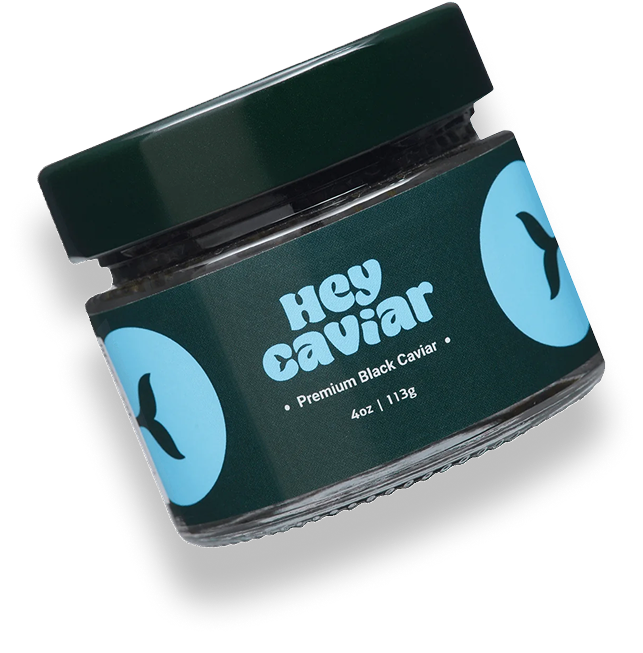
If you’re spending good money on caviar, most of that value should show up when you open the jar. With our Grade A Kaluga, that means large, firm beads with a clean pop and a smooth, buttery flavor. We keep the selection focused and the supply chain short so we can pay attention to the caviar itself and how it reaches you.
There will always be more expensive jars out there, and there will always be cheaper ones. Compare what’s actually being sold before deciding which is the better deal. If our Kaluga is the one you want to eat, we’ll make sure the money gets you good caviar rather than another reason to refinance the house.
Get your jar. Pretend you’re important