Why is caviar so costly?
(And why it needn't be)

It is believed that at some point “expensive” and “worth it” became mixed up.
A Question That Deserves a Straight Answer
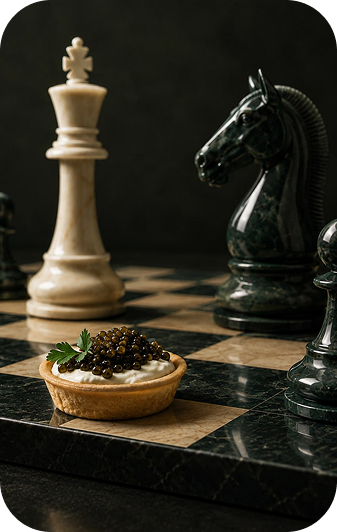 If you ask the average person why caviar is so expensive, they’ll only shrug and give you some version of “it just is.”
That isn’t an answer; it’s an assumption that the category has been able to get away with for a long time, mainly since caviar has always felt more at home being mysterious than being explained, because mystery is profitable and fails when someone actually poses the question.
Well, here is the straightforward version.
Some of the high price of caviar is well deserved, having come about through time, labour, and a level of precision which cannot be hurried. The rest of the price has nothing to do with the caviar itself; it is due to all the additional elements that are added on after the caviar has already been produced, elements which have been layered onto a supply chain that was set up decades ago and has never really been redesigned. When you can distinguish between those two aspects, the idea of caviar being expensive ceases to be a mystery and becomes something you can actually assess.
Quick Takeaway
Caviar is costly for real reasons—years of farming and careful handling—but much of the final price can come from middlemen, not better quality.
What’s Genuinely Earning Its Cost
 Begin with the factual, since it is in fact real.
Sturgeon caviar is the result of a process which does not allow for shortcuts. It takes sturgeons many years to mature before they are ready to produce their roe, although in some cases this can take almost a decade according to the species. This involves many years of careful rearing, closely monitored conditions, and a great deal of patience – something that is not normally required in most food production. Together with the precision needed during harvesting and curing, where even minor errors are immediately noticeable in both texture and flavour, you have a process that is truly laborious and time-consuming.
That isn’t an exaggeration; it is the real cost of producing something that is difficult to produce well.
What makes it more complicated is all that takes place afterwards.
The Part of the Price That Isn’t About the Caviar
 After caviar has left the farm it generally comes into a long chain consisting of importers, distributors, wholesalers and specialty retailers as well as luxury boutiques. Each of them takes a margin and each of them adds some time. None of them enhance the product.
The aspect of caviar pricing which is seldom mentioned mostly arises from the fact that it’s不利 for the companies dependent on it. A significant portion of what gives traditional retail caviar its high price has nothing to do with the sturgeon, the farming, or the way it’s handled; rather, it’s due to the number of businesses that come into contact with the product before it reaches you and the amount that each of them adds to the price in the process.
It’s a structural advantage, not a quality one, and it remains even if the caviar inside the jar is of a superior or ordinary sort.
Why the Category Rarely Admits This
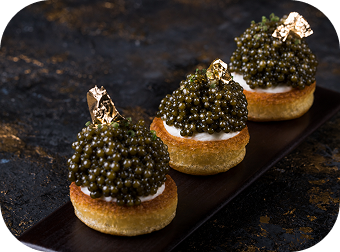 That’s why this subject isn’t talked about very often.
Caviar has for many generations been presented as naturally and without hesitation an expensive product, and this approach has proved useful to a great many of the companies that sell it. When the price seems mysterious and inviolable, people never ask uncomfortable questions about where the money actually ends up. And when it seems as though the price is the result of scarcity and prestige rather than the outcome of a long series of intermediaries, then the markup is accepted without question.
It’s a convenient explanation for those in the middle of the supply chain, but not one that suits the people who have to pay for it.
Quick Takeaway
Caviar prices stay high partly because tradition frames cost as scarcity and prestige, while supply-chain markups often go unquestioned.
What Changes When You Remove the Middle
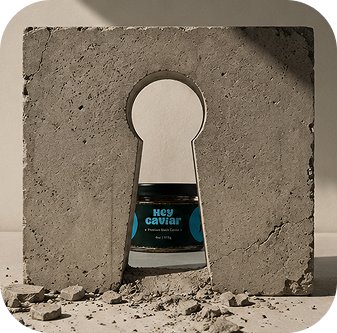 The more useful way of looking at it is this: if part of the price of caviar is due to the distance between the farm and your door, then reducing that distance should result in a meaningful change in the price, without in any way affecting the quality.
The whole point of a direct farm-to-door caviar delivery system is that the sturgeon still reaches maturity according to the same timetable and the standards for harvesting and handling remain unchanged. All the middle stages that are added on disappear: the importers, the wholesalers, and the successive retail markups. What remains is a price which reflects the true cost of production rather than the cost of a supply chain designed for a different era.
It is here that premium caviar and cheap caviar cease to be opposites. A product can in fact be genuinely of high quality and yet remain reasonably priced, provided that it is not subject to the expenses of a distribution system which was designed decades ago when direct shipping wasn’t an option. It is precisely this combination—real quality without a inflated markup—that a more direct approach makes possible.
Reframing Caviar as Accessible Luxury
Luxury has for ever had two distinct meanings, and caviar has mostly relied on the wrong one.
A form of luxury is based on exclusivity in itself: it lies in scarcity, in prestige, and in the idea that something is valuable simply because only a small number of people can have it. The alternative is one based on quality: something is exceptional merely because it has been made with care, no matter how many people get to enjoy it.
 Caviar has usually placed more emphasis on the first definition than it really ought to have. Yet no aspect of sturgeon roe needs artificial scarcity or a marked-up price to be worth looking for; the production process itself is what makes it special and doesn’t require an extensive supply chain to add to its exclusivity.
After the excess markup has been taken away, what remains is luxury in the true sense of the word: something of a high standard, well made, and accessible to a greater number of people than the conventional approach had ever permitted. That doesn’t mean it’s a less valuable version of caviar; it might in fact be the correct one.
Where This Leaves the Question
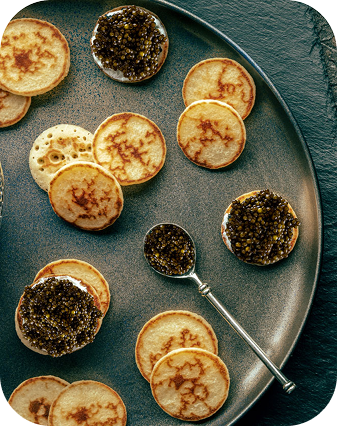 That is why caviar is so expensive.
Part of it, truly, since it ought to be. The years spent farming, the careful way it has been managed, and the fact that the process can’t be sped up all have a real cost, and that cost is one that is worth bearing.
Yet a large portion of the cost is due to the fact that the distance between the farm and your table has always been so great. This portion is not a necessary rule of the category; it’s a structural decision, and one that a more direct model is not required to make.
Caviar needn’t be a luxury limited to a small number of people; it must be produced with care. All that remains is a choice regarding how it gets to you, and that choice has been more flexible than the industry had ever admitted.

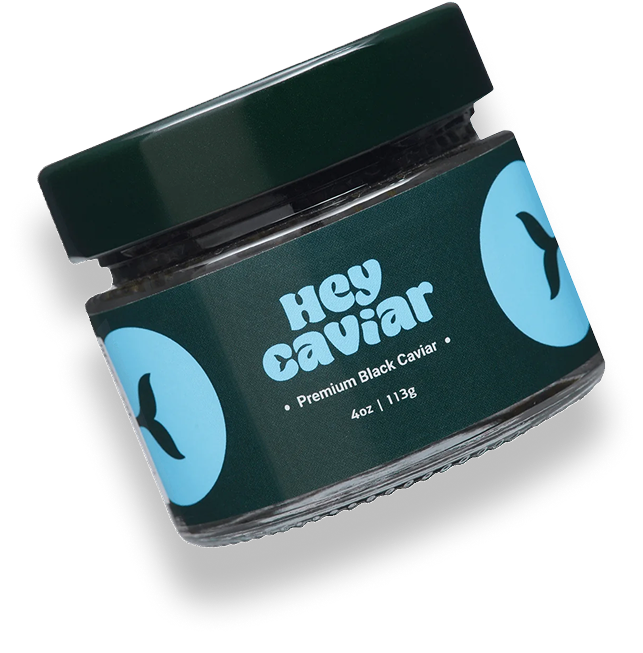
Why Small
Luxuries Aren’t
Going Anywhere?
This is a recalibration, not a phase. People are learning that joy doesn’t need scale, indulgence doesn’t need permission, casual luxury doesn’t need to last to matter
Small luxuries work because they respect reality. They meet people where they are… Tired, busy, still deserving of something good. And right now, that’s enough.
Actually? That’s everything.