Is Caviar Healthy? Nutrition
Facts, Calories, and What It
Actually Contains

Lover of precision, especially when food meets biology
Is Caviar Healthy?

Caviar can fit into a balanced diet when consumed in moderation. It contains protein, omega-3 fatty acids, vitamin B12, selenium, and iron, BUT, it is also naturally high in sodium.
Understanding caviar benefits means looking at both sides of that equation: caviar provides a high concentration of nutrients in a small serving, but the salt used to cure it also contributes a meaningful amount of sodium.
Quick Takeaway
Caviar provides protein, omega-3 fatty acids, vitamin B12, selenium, and iron in a relatively small serving. It is also naturally high in sodium, so both nutrient density and salt content matter when considering its health benefits.

What Is Caviar Made Of?

Caviar is made of salt-cured roe from sturgeon. In practical terms, it consists of fish eggs and salt.
The eggs themselves are biologically nutrient-dense because they are designed to support early development. That characteristic is true of many forms of fish roe. What distinguishes caviar is species (sturgeon) and curing technique, not added ingredients.
Because it is minimally processed, the nutritional profile reflects the natural composition of the roe rather than fortification or enhancement.
Caviar Nutrition: What’s Actually Inside
A typical serving of caviar – about one tablespoon (roughly 15 grams), contains:
- Complete protein
- Omega-3 fatty acids
- Vitamin B12
- Selenium
- Iron
- Cholesterol
- Sodium
In absolute calorie terms, the portion is modest. What makes caviar notable is that it delivers a relatively high concentration of nutrients within a small serving size.
When people talk about caviar benefits, this nutrient concentration is an important part of what they mean, especially considering how little caviar is typically eaten at one time.
Omega-3s and Protein

One of the most frequently cited black caviar health benefits is its omega-3 fatty acid content.
Omega-3s are widely studied for their role in cardiovascular and neurological function. Caviar contains these fats naturally because fish eggs store concentrated lipids for development.
It also provides complete protein, meaning all essential amino acids are present. However, caviar is typically consumed in small amounts, so it functions as a concentrated nutritional addition rather than a primary protein source.
That serving size is important when evaluating these benefits. Caviar can contribute protein and omega-3s to your diet, but the amount you actually consume will usually be much smaller than a typical serving of fish or another primary protein source.
Sodium and Cholesterol: The Practical Consideration
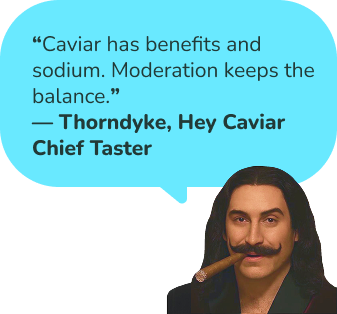
Because caviar is cured with salt, sodium is the most significant nutritional variable.
A tablespoon can contain a meaningful portion of recommended daily sodium intake. For individuals monitoring blood pressure or sodium consumption, this is the factor to evaluate first.
Cholesterol is also naturally present in fish eggs. While dietary cholesterol is now understood differently than it was decades ago, individual health contexts vary.
So the nutritional picture has to include both sides: caviar provides valuable nutrients, but it also contributes sodium. For most people, the practical way to account for that is simply to keep the portion in context rather than treating caviar as something to eat in large quantities.
Are Black Caviar Health Benefits Different?

Nutritionally, black caviar derived from different sturgeon species, including Kaluga caviar, is broadly similar in macronutrient structure.
Flavor, bead size, and texture vary by species. Nutrient composition does not shift dramatically between varieties. When people search for black caviar health benefits, they are usually asking whether it offers something fundamentally different from other roe.
The nutritional differences are less dramatic than the differences in flavor and texture. Sturgeon roe and other types of fish roe share many of the same basic nutrients, while the term caviar specifically refers to roe from sturgeon.
Quick Takeaway
Black caviar from different sturgeon species varies in flavor and texture, not nutrition. Most types share a similar nutrient profile – the real differences come from species and preparation.
Sustainable Caviar and Nutritional Integrity

Modern sustainable caviar production emphasizes responsible sturgeon farming and controlled environments.
While sustainability does not directly change nutrient composition, it does influence handling, freshness, and storage consistency. Maintaining the condition of the roe depends on proper temperature control, sealing, and minimizing unnecessary exposure to air.
Once opened, roe should be kept refrigerated and consumed within a short window to maintain both flavor and structural quality.
At Hey Caviar, transparency around sourcing and handling is prioritized because the nutritional profile is only one part of the product. Proper handling is what helps the caviar reach you in the condition it was intended to be eaten.
Is Caviar a Superfood?

“Superfood” is a marketing term, not a scientific classification.
Caviar is nutrient-dense for its size. It contains omega-3 fatty acids, micronutrients, protein and sodium.
That makes it a nutrient-rich food, but not a miracle health product. The benefits come from the nutrients naturally present in sturgeon roe, and they still need to be considered in the context of the relatively small portions in which caviar is normally eaten.
And yes, black caviar still functions primarily as a culinary experience, not a dietary supplement, so understanding how to eat and taste caviar matters more than treating it like a health product.
 How Caviar Fits Into a Balanced Diet
 How Caviar Fits Into a Balanced Diet
Because it is typically consumed in small servings, caviar’s calorie contribution is modest. Its nutrient density can complement a varied diet when intake is measured.
Understanding caviar benefits means placing them in context: a small portion provides micronutrients and fats, while excessive consumption would increase sodium intake disproportionately.
When approached realistically, caviar fits into many dietary patterns without complication.
The important part is the proportion: the same small serving that gives you a concentrated amount of nutrients also keeps the sodium contribution more manageable.


Caviar That’s Worth Adding to the Menu
Caviar happens to contain omega-3s, protein, vitamin B12, and several important minerals, but most people aren’t opening a jar to improve their nutrient intake. They’re opening it because a small spoonful can bring a lot of flavor and texture to something as simple as eggs, toast, or a potato chip.
Our Grade A Kaluga caviar is an easy place to start. The beads are large and firm, with a clean pop and a smooth, buttery flavor that works just as well on its own as it does with your favorite pairing. Keep the portions reasonable, enjoy the nutritional benefits, and buy it for the part that matters most: it’s really good caviar.
Get your jar. Pretend you’re important