Caviar vs. Roe: What’s the
Difference (and Why It
Matters)?

Lover of definitions that prevent expensive confusion
Caviar vs. Roe: The Short Answer
Caviar is a specific type of roe.
Roe is the general term for fish eggs from any species.
Only roe from sturgeon is considered true caviar. Everything else is labeled by the fish it comes from.
This distinction isn’t branding. It’s biological classification.
Quick Takeaway
All caviar is roe, but not all roe is caviar. Caviar refers specifically to salt-cured roe from sturgeon, while roe includes fish eggs from many different species.

What Is Roe?

Roe is the broad category. It includes fish eggs from salmon, trout, flying fish, cod, and many others.
You’ve likely seen roe in bright orange salmon pearls on sushi or in seafood dishes. These are examples of fish roe, accurately labeled and widely used.
Roe describes origin, not prestige. It simply means fish eggs.
What it does not automatically mean is caviar.
What Is Caviar?
 Caviar refers specifically to roe harvested from sturgeon and cured with salt.
That species requirement is not optional. If the eggs don’t come from sturgeon, they are not caviar, regardless of packaging, price positioning, or menu language.
True sturgeon caviar is defined by both species and preparation. The curing process is minimal and precise, designed to preserve bead integrity and natural flavor rather than overpower it with salt.
If you’re wondering what is caviar made of, the answer remains simple: sturgeon roe and salt. The complexity comes from handling and technique, not from added ingredients.
This is also why premium caviar tends to taste clean and structured rather than aggressively briny. When the curing is correct, the roe retains its texture and releases flavor gradually – one of the defining differences from many other types of roe.
Why the Distinction Matters
The difference between caviar and roe affects three key things:
- Flavor expectations
- Texture and structure
- Sourcing and classification
Sturgeon roe, especially in forms commonly referred to as black caviar, typically has a softer membrane, smaller bead variation, and a more integrated salinity. Salmon roe, by contrast, is larger, brighter, and tends to deliver a more immediate pop and stronger salt-forward impression.
If someone tries caviar expecting the intensity of salmon roe, they may assume something is wrong. In reality, they are comparing two different categories.
In a proper caviar tasting, this becomes obvious. Caviar leans subtle. Roe from other species often leans bold. Neither is “better” in isolation but they are not interchangeable.
Precision prevents disappointment.
What Does Black Caviar Mean?
The term black caviar generally refers to caviar sourced from sturgeon species that produce darker-colored eggs, such as Osetra or Kaluga.
 Color can range from charcoal to deep brown or gray. While color alone does not determine quality, darker tones are traditionally associated with certain sturgeon varieties.
Importantly, “black” does not mean dyed or flavored. It reflects the natural hue of the roe.
The more relevant indicator of quality is bead integrity and balance, not shade.
 Is Roe Lower Quality Than Caviar?
 Is Roe Lower Quality Than Caviar?
Not inherently.
Roe from non-sturgeon species can be high-quality within its own culinary context. Salmon roe, trout roe, and other fish eggs serve different flavor profiles and textures. They are not substitutes, they are alternatives.
However, if your goal is the restrained salinity, fine bead structure, and slow-release texture associated with caviar, only sturgeon roe will deliver that specific experience.
At Hey Caviar, we emphasize this distinction not to elevate one category artificially, but to remove confusion. Clear definitions make better first impressions.
Quick Takeaway
Roe isn’t lower quality than caviar—just different. Only sturgeon roe delivers the subtle salinity and fine texture that define true caviar.
Why This Matters in Modern Food Culture
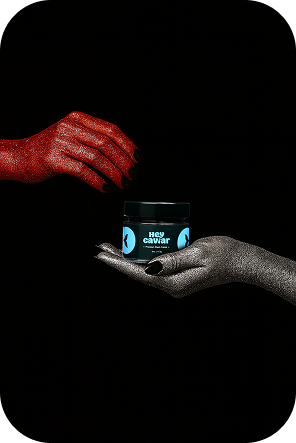 As interest in sustainable caviar has boomed recently, species transparency and sourcing clarity have become more important. Most modern caviar now comes from responsibly farmed sturgeon, which supports conservation while improving consistency.
That means more people are encountering caviar for the first time and more labels are competing for attention.
When someone asks what does caviar taste like, the first clarification should be whether they’re talking about true sturgeon caviar or roe from another species.
Definitions shape expectations. Expectations shape experience.
And with black caviar, precision is the difference between confusion and appreciation.

Why Small
Luxuries Aren’t
Going Anywhere?
This is a recalibration, not a phase. People are learning that joy doesn’t need scale, indulgence doesn’t need permission, casual luxury doesn’t need to last to matter
Small luxuries work because they respect reality. They meet people where they are… Tired, busy, still deserving of something good. And right now, that’s enough.
Actually? That’s everything.